
UX Ideation Workshop
What running Design Thinking sessions with Scrum Masters at FTI and myToys actually taught me
Key Takeaways
A good ideation workshop doesn’t find the best idea. It creates enough ideas that the best one has room to show up. Structure beats inspiration every time.
In this article
There’s a moment at the start of every ideation workshop I’ve learned to watch for.
The room fills up. Product owner, two developers, someone from marketing, maybe a stakeholder who isn’t sure why they’re there. They sit down, look at each other. And then they look at you.
What happens next decides everything.
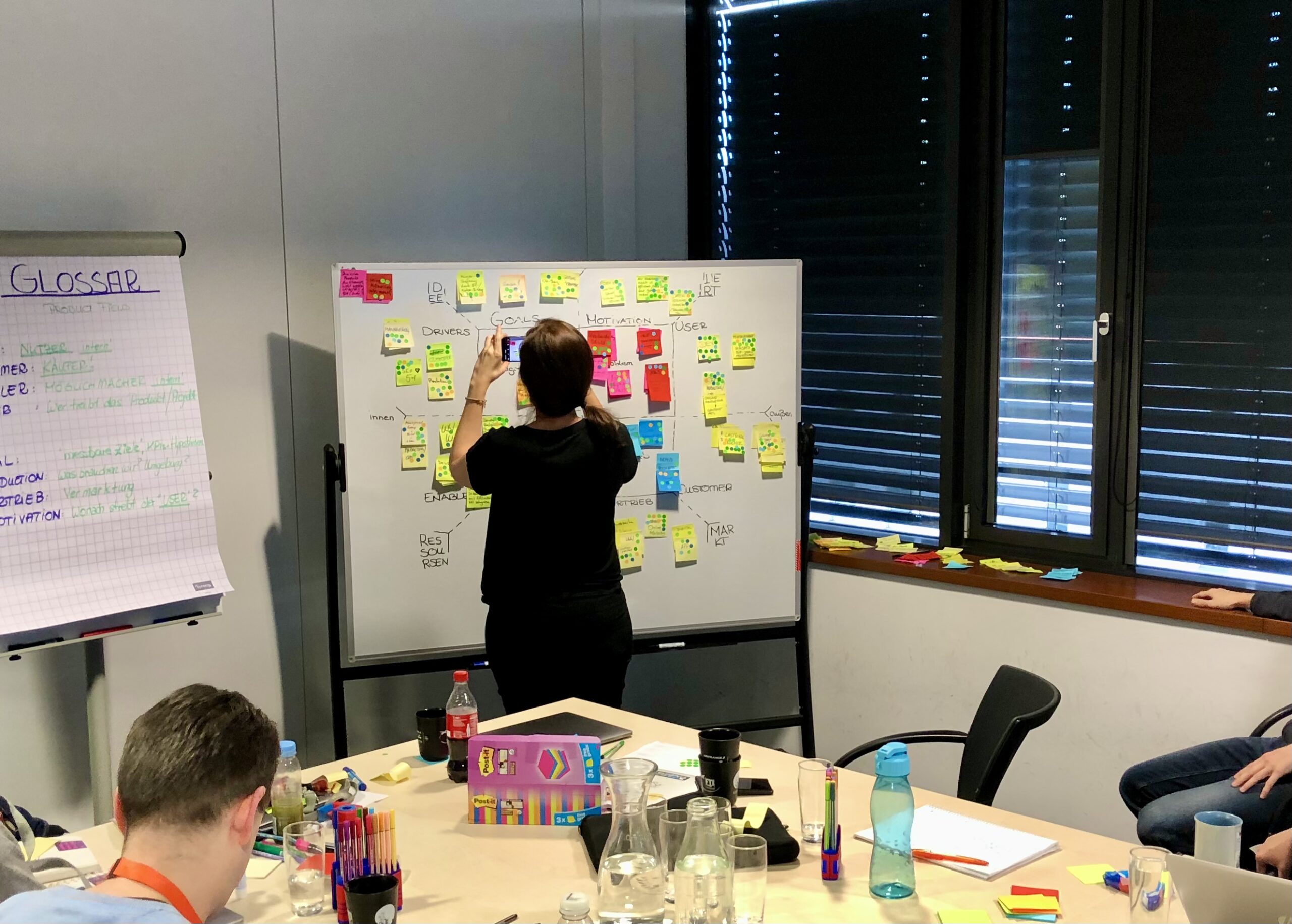
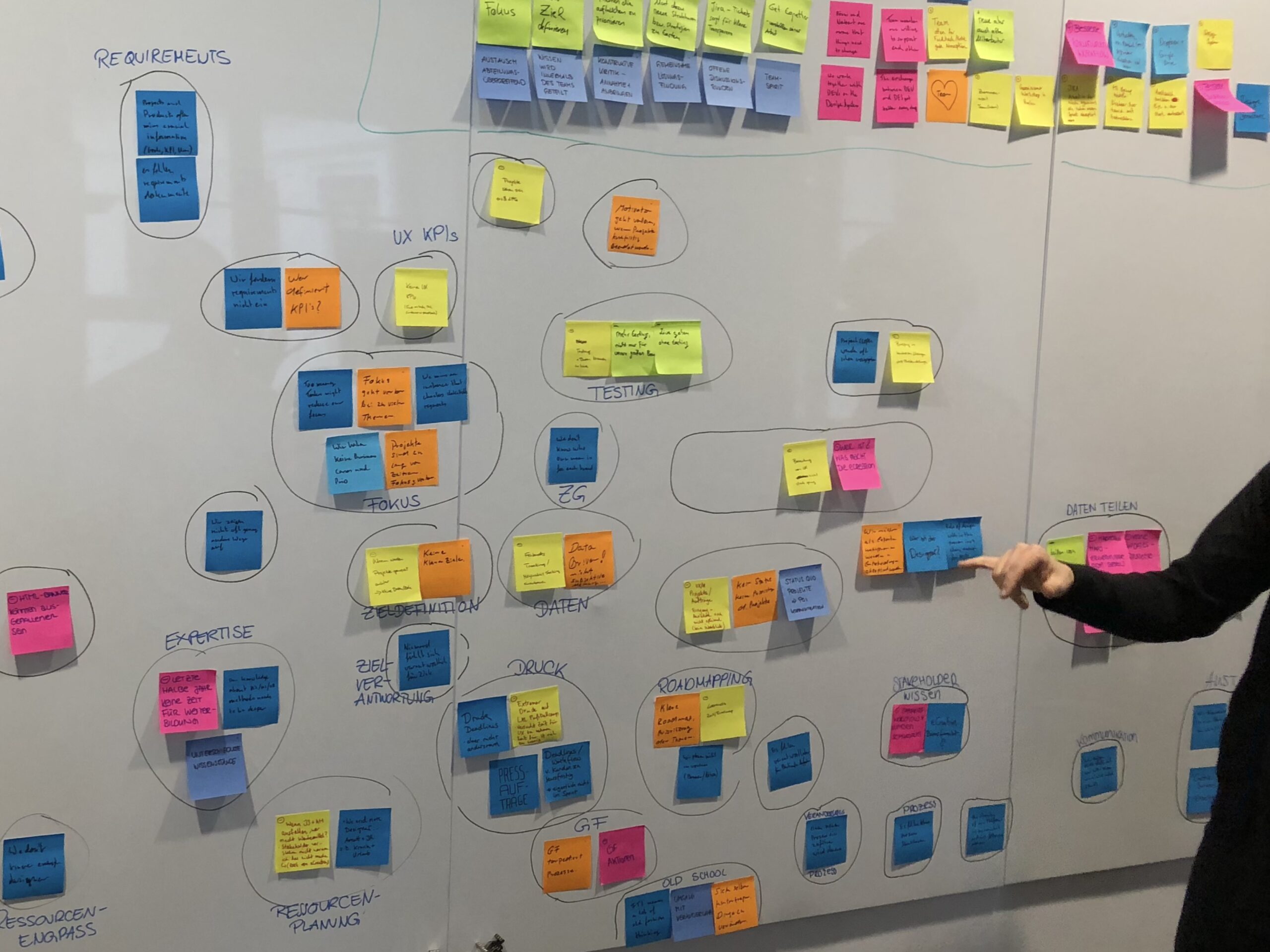
I’ve run Design Thinking ideation sessions at FTI Group and myToys – two very different companies, same fundamental challenge: get smart people to stop thinking in silos and start building on each other’s ideas. At FTI and myToys, Agile Scrum Masters co-facilitated with me. That changed how I think about workshops entirely.
Where Ideation Fits
Ideation is stage three of Design Thinking: Empathize → Define → Ideate → Prototype → Test. You do it after you understand your users and after you’ve framed the right problem. Not before.
And it’s not a one-time thing. A prototype test reveals something new. You loop back to ideation. A stakeholder review shifts the frame. You run another session. That’s normal. Build it into the expectation from the start.
Why Most Ideation Sessions Fail
Someone books a room, writes “brainstorming” on the agenda, and hopes for the best.
What actually happens: the loudest voice wins, the quieter people defer, and the team leaves with three ideas that were already in Slack. No new thinking. Just existing assumptions with a whiteboard in the background.
The problem isn’t the people. It’s the missing method.
Creativity isn’t something you unlock by putting people in a room. It’s something you unlock by giving them the right constraints.
The Methods That Work
Six methods I keep coming back to – each one does something structurally different to how a group thinks.
How Might We (HMW)
Reframes problems into opportunities. “People abandon checkout at payment” becomes How might we make payment feel less like a commitment? At FTI, this turned an internal technical argument into a design opportunity. Engineers went from defending constraints to solving them.
Crazy 8s
Eight sketches in eight minutes. No polish, no judgment. The time pressure bypasses self-censorship. At myToys, three “probably stupid” sketches from round five ended up shaping the final concept direction.
8 ideas.
8 minutes.
No judgment.
Crazy 8s is the fastest way to move a group
from ‘I don’t know’ to ‘let’s pick one of these’.
Time pressure removes the self-censorship.
Brainwriting
Like brainstorming but silent. Everyone writes ideas independently, then passes the paper for others to build on. No social hierarchy, no one voice dominating. Especially useful in remote workshops or teams where a few people tend to take over.
Worst Possible Idea
Ask for the worst solution to the problem. The most expensive, most user-hostile, most absurd. The room usually erupts – and the inversions of bad ideas often point directly to good ones. “Charge users for every scroll” → “what if the payment moment felt rewarding instead?” Fast way to surface hidden assumptions.
Mash-Up
Combine two unrelated things. Checkout flow + hotel check-in. Product filter + Spotify playlist. This breaks e-commerce conventions that solidify over years of iteration. Most mash-ups don’t survive feasibility – but they shift the frame enough to find one genuinely new direction.
Value vs. Feasibility Mapping
Post-ideation triage. 30 ideas on a 2×2: user value vs. implementation effort. The conversation about what “value” actually means is often more useful than the grid itself.
A Real Workshop: What It Actually Looks Like
Here’s roughly how I ran a half-day ideation session at myToys. The challenge was a drop-off in the wishlist-to-cart flow – users were saving products but not coming back to buy them.
- Warm-up: My First Job (10 min) – everyone shares their first ever job. Breaks down hierarchy fast. People laugh. The room opens up.
- Problem framing (15 min) – we reviewed three key findings from prior user research together. Not a long presentation. Just: here’s what we know about why people don’t come back.
- HMW round (20 min) – everyone writes HMW questions on Post-its individually, then we cluster and vote. We left with five strong reframes to work from.
- Worst Possible Idea (10 min) – pure warm-up for the sketching round. Generated a lot of laughter and two genuinely useful inversions.
- Crazy 8s (8 min) – individual sketching, no talking. Then two minutes each to present your favourite sketch.
- Concept clustering (20 min) – group similar sketches, name the patterns. We had four concept directions by lunch.
- Value vs. Feasibility Map (15 min) – with the Scrum Master actively running this part. The output landed directly in the sprint backlog the next morning.
Total time: about 100 minutes of actual work. The Scrum Master handled the timeboxes so I could focus on the room.
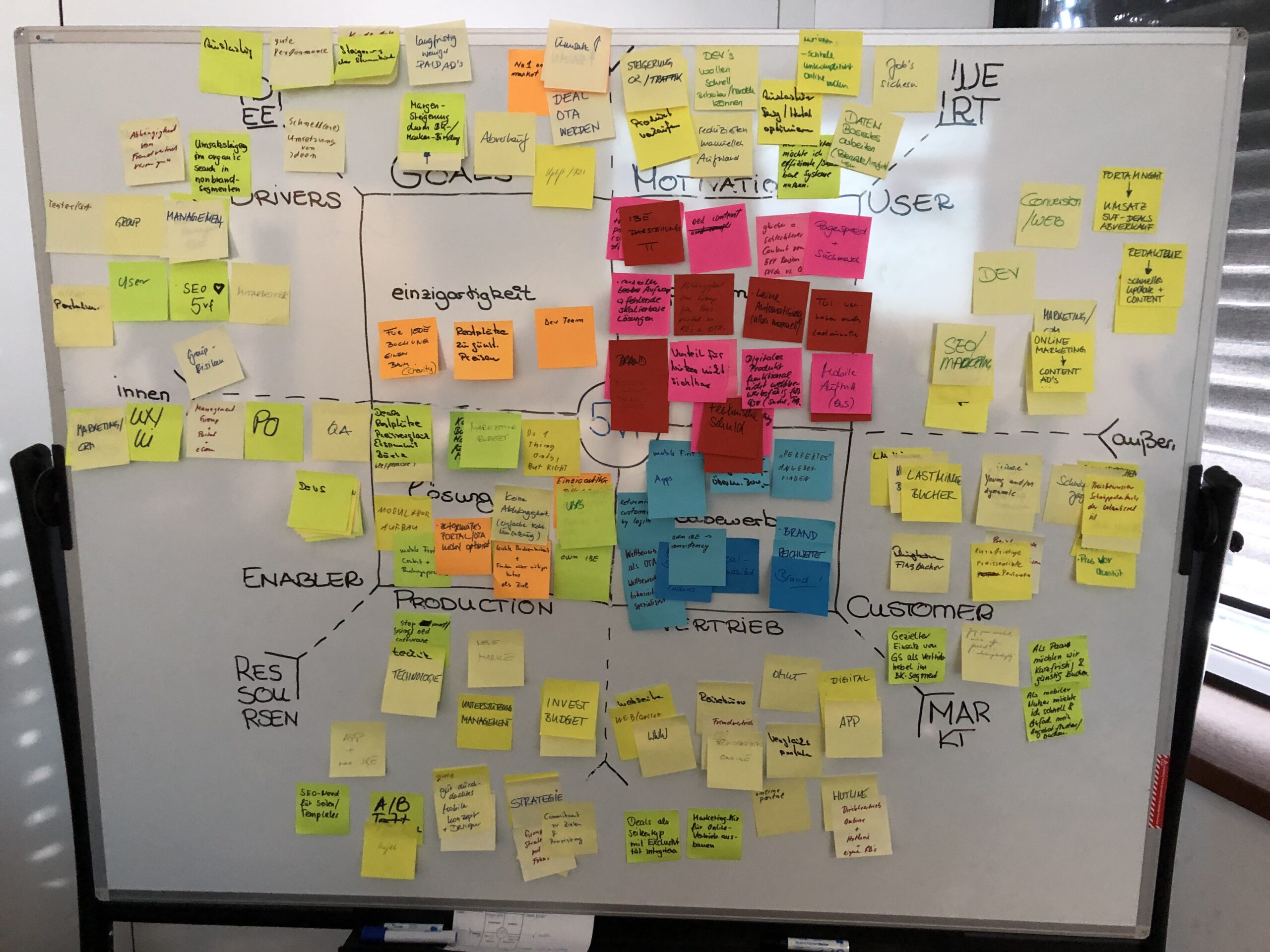
The best workshops feel chaotic in the middle and surprisingly clear at the end. That’s the structure working.
The Off-Topic Warm-Up: Why It Works
One of the best moves you can make before running ideation on your actual challenge: practice the method on something completely unrelated first.
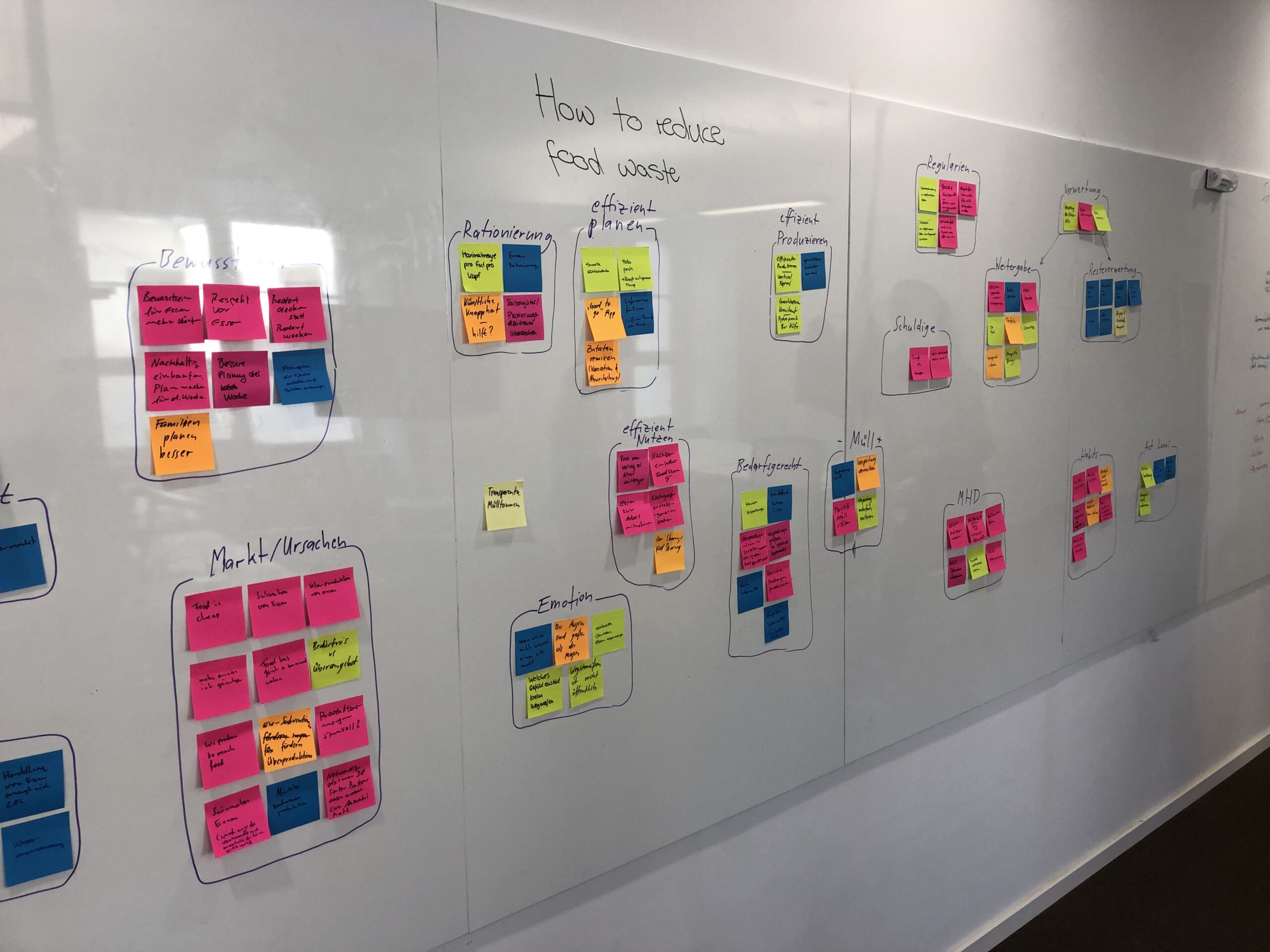
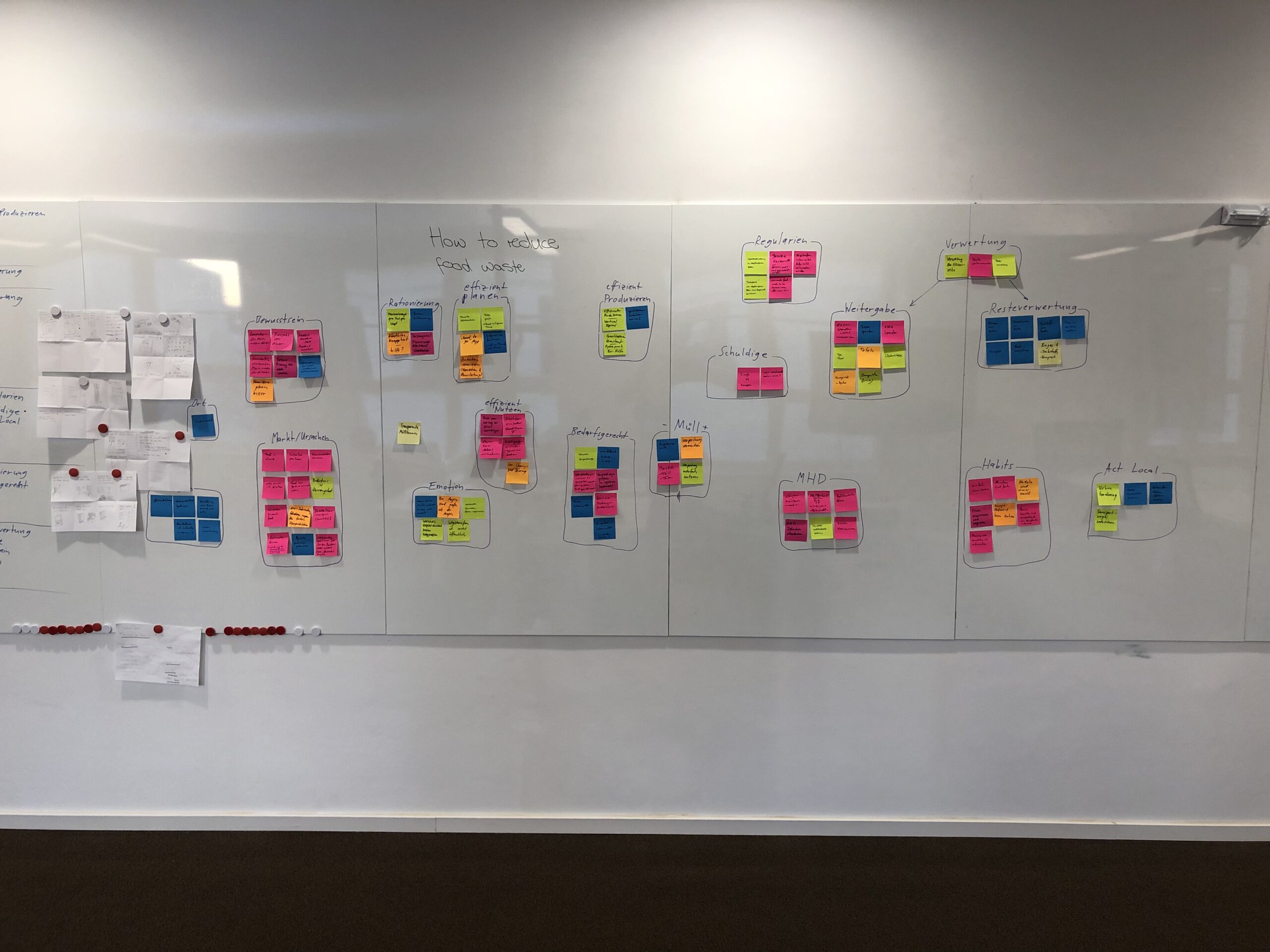
At one of the FTI workshops we used “How to reduce food waste” as the warm-up topic. Nothing to do with travel, no stakes, nobody had a strong opinion. We ran a full mini-loop: Crazy 8s, clustering, dot voting, top ideas. About 25 minutes total.
What it did: everyone learned the rhythm of the method in a low-pressure environment. By the time we switched to the real challenge, the team already knew what “go wide” felt like, had practiced sketching without judgment, and had a reference point for what good clustering looks like. The actual ideation ran noticeably faster because nobody was learning the method and solving the problem at the same time.
Pick any neutral human topic – food waste, public transport, waiting in queues. Run one quick loop. Then switch to the real work.
What Makes It Work
Preparation
Review the research, define the problem statement, set a specific output goal. Not “generate ideas” – more like “leave with five HMW questions and eight sketched concepts.”
Diverse teams
The most useful perspectives at FTI came from the backend dev and the customer service lead – not the designers. Include everyone who knows where the friction actually is.
Ground rules
IDEO’s classics still hold: defer judgment, build on others’ ideas, go for quantity, encourage wild ideas. Post them visibly. They give you permission to redirect without it feeling personal.
Structure with warmth
Icebreakers aren’t soft – they’re functional. People who’ve laughed together sketch more freely.
What You Actually Get Out of It
UX acceptance grows across the organisation
When a developer, a stakeholder, and a product owner have all sketched ideas together, they leave with a different relationship to UX. It becomes a shared language – and that shift is often more durable than any single output from the session.
User focus returns
Teams deep in implementation lose the thread back to users. A well-run ideation session pulls it back.
Quantity creates safety
30 rough ideas make it psychologically safe to share the one that seemed too weird. Quantity is the precondition for quality.
Shared ownership
The developer who sketched an idea is a different kind of partner than one who received a spec. Co-authorship creates accountability.
What to Do Next
Never run an ideation workshop before? Start small: one HMW question, 20 minutes of Crazy 8s. You don’t need a full day to feel the difference.
Already running workshops but they feel flat? Look at the room before you look at the methods. Who’s missing? Who’s too dominant?
And if you have a Scrum Master curious about UX – bring them in. The combination works better than most people expect.
Sources
- Brown, T. (2009). Change by Design. HarperBusiness.
- Knapp, J., Zeratsky, J., & Kowitz, B. (2016). Sprint. Simon & Schuster.
- IDEO U. (2024). Design Thinking & Ideation. ideou.com
- Interaction Design Foundation. (2024). What is Ideation. interaction-design.org
- Subramanian, K. (2023). What Is Design Thinking? Smashing Magazine. smashingmagazine.com
- Gothelf, J., & Seiden, J. (2021). Lean UX (3rd ed.). O’Reilly Media.
René Manikofski is a Senior UX Designer with 10+ years of experience in e-commerce and digital product design across Europe. All articles are based on personal professional experience and supported by AI in writing.